
Essential Website Features Every Contractor Needs to Generate More Leads
A successful contractor website does far more than sit online as a digital brochure. It attracts qualified leads, builds trust, showcases your best work, and turns visitors into real projects on your calendar.
In a competitive construction and home services market, your website is often the first impression a prospect has of your company. When it’s built the right way, it works 24/7 as a marketing and sales system—not just something you “have to have.”
This guide walks through the essential features every contractor website needs to stand out, convert more leads, and support long-term business growth. For a broader overview of why contractor sites matter and how they fit into your marketing plan, you may also want to read our article on Contractor Websites.
1. Professional, User-Friendly Design
Homeowners and commercial clients make fast decisions based on how your website looks and feels. A clean, modern design immediately communicates professionalism and competence.
Clear Navigation
- Use simple menu labels like “Services,” “Projects,” “About,” and “Contact.”
- Keep your navigation consistent on every page.
- Make it easy to get to your main money pages (key services and contact).
Mobile-Responsive Layout
Most people will visit your site on a phone. Your website should automatically adjust to different screen sizes so that text is easy to read, buttons are easy to tap, and forms are simple to fill out on mobile devices.
Fast Loading Times
- Compress and properly size images (aim for under ~150 KB when possible).
- Limit heavy scripts and unnecessary plugins.
- Use caching and a reliable hosting provider.
A slow, cluttered site makes visitors bounce before they ever see your work or your offer. A fast, polished site makes everything else on this list more effective.
2. Service Pages That Sell (High-Quality Content & Portfolio)
Your services and portfolio are where visitors decide if you are the right contractor for the job. A bullet list of services is not enough. Each important service deserves its own page with detail and proof.
Detailed Service Pages
- Create one page for each major service that meaningfully contributes to your revenue.
- Explain who the service is for, what’s included, and what makes your approach different.
- Answer common questions about timelines, materials, warranties, and process.
For a deeper step-by-step process on planning and building your site around these service pages, you can review our Step-by-Step Guide to Building a Contractor Website.
Choosing What to Feature
Not every small service needs a full page. Focus on the services that drive real profit. Minor add-on services can be mentioned in a short paragraph, a graphic, or a note such as “Ask us about…” so you don’t waste valuable SEO space on low-revenue items.
Professional Project Photography
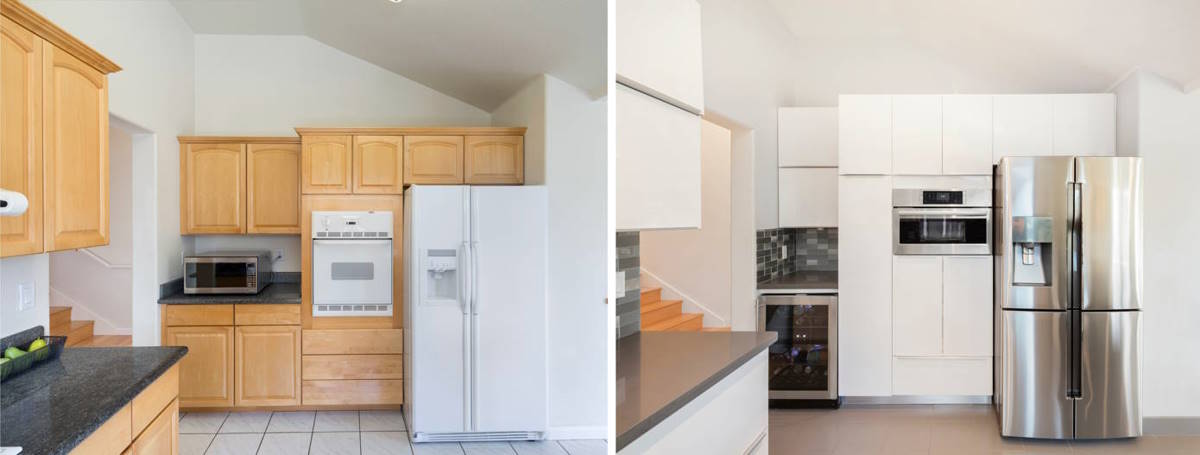
High-quality project photos are one of the strongest conversion tools you have. If possible, use a professional photographer. If budget is tight, consider hiring a talented student or serious hobbyist.
- Shoot after the job is completely cleaned up.
- Avoid ladders, tools, and debris in the frame.
- Highlight the areas clients care about most (kitchens, living spaces, primary suites, exteriors).
- Use before-and-after photos where they tell a clear transformation story.
Project Stories and Results
Whenever you can, turn projects into mini case studies:
- Describe the client’s problem or goal.
- Explain the solution you designed and why.
- Show the result using photos and a short summary.
- Add a client quote or testimonial directly on the project page.
This “story plus proof” approach builds far more trust than photos alone.
3. SEO Foundations for Contractor Websites
Great design and content won’t help much if no one can find your website. Search engine optimization (SEO) helps your site appear when homeowners and businesses search for the services you offer.
On-Page Structure
- Use one clear H1 heading per page that matches the main topic.
- Break content into logical sections with H2 and H3 subheadings.
- Include your primary keyword and location naturally in headings and copy where appropriate.
Meta Titles and Descriptions
- Write a unique title tag for each page (about 50–60 characters).
- Add a compelling meta description that explains the benefit of clicking (about 140–160 characters).
Helpful, Keyword-Rich Content
Use the same phrases your ideal clients use when they search online. For example, instead of simply saying “services,” use terms like “kitchen remodeling contractor in Denver” or “commercial concrete contractor.” Write naturally and focus on being helpful and clear.
Image Optimization
- Rename image files with descriptive names (for example,
denver-kitchen-remodel-before-after.jpg). - Add descriptive alt text that explains the image and, when appropriate, includes a service and location.
Internal Linking
Connect related content on your site so visitors (and search engines) can easily move between pages. For example, from this article you might send visitors to your main guide on Websites for Contractors or to your more detailed tutorials and service pages.
4. Clear and Accessible Contact Options
Your contact information should be obvious from any page. When someone is ready to talk, don’t make them hunt for a phone number or form.
- Display phone number and “Request a Quote” or “Schedule a Consultation” button in the header.
- Include a short contact form on key service pages and the contact page.
- Add your service area or main city in the footer so visitors instantly know if you serve their location.
Short, friction-free forms tend to convert best. Ask only for the information you truly need to start the conversation.
5. Customer Reviews and Testimonials
Social proof is one of the strongest trust signals on a contractor website. Prospects want to see that other people like them had a good experience working with you.

- Feature a mix of short quotes and longer testimonials.
- Include the customer’s first name, city, and type of project when possible.
- Embed or reference reviews from platforms like Google Business Profile and Houzz.
- Organize testimonials by service type (remodeling, roofing, new construction, etc.).
If you have video testimonials, place them near calls-to-action so visitors can watch and then immediately take the next step.
6. Blog and Educational Content
A blog or insights section allows you to answer common questions, explain your process, and establish yourself as an expert. It also creates more opportunities to rank in search engines for long-tail topics.
- Write articles that respond to questions you hear from clients all the time.
- Publish explainers on materials, timelines, budgets, and project phases.
- Share maintenance tips, checklists, and how-to guides for homeowners and property managers.
Even one or two high-quality articles per month can build momentum over time. Consistency matters more than volume.
7. Trust Signals and Professional Credentials
Trust signals help visitors feel confident hiring you, especially if they’re comparing multiple contractors.
- Display licenses, certifications, and insurance information.
- Show logos for builder associations, trade organizations, and local chambers.
- Highlight awards, press mentions, or recognition you’ve received.
- Include any guarantees or warranties you offer.
Place trust badges and proof near forms and CTAs where people are making decisions.
8. Strong Calls-to-Action (CTAs) and Lead Capture
A contractor website should guide visitors toward one clear next step. Make your calls-to-action specific and benefit-focused.
- Use phrases like “Request Your Free Estimate,” “Schedule a Design Consultation,” or “Talk to a Project Specialist.”
- Place CTAs near the top of the page and again after you present proof and details.
- Consider using a short, low-friction offer first (for example, a quick discovery call) before asking for a large commitment.
You can also offer downloadable guides or checklists in exchange for an email address. Just be sure the resource truly helps your ideal clients make better decisions.
9. Security, Performance, and Ongoing Maintenance
Behind the scenes, your website needs to be safe, secure, and maintained. Visitors may not see this work, but they feel the results in speed, reliability, and trust.
- Use HTTPS (an SSL certificate) so browsers show your site as secure.
- Keep your CMS, theme, and plugins updated.
- Monitor uptime and fix broken links or forms quickly.
- Back up your website regularly so it can be restored if something goes wrong.
Think of website maintenance like maintaining your tools and vehicles—it protects your investment and your reputation.
10. Frequently Asked Questions About Contractor Websites
What makes a contractor website successful?
A successful contractor website combines clear messaging, strong visual proof, easy navigation, fast loading times, and obvious calls-to-action. It should make it simple for visitors to understand what you do, see the quality of your work, and contact you.
How many pages should my contractor website have?
At minimum, you’ll want a home page, about page, contact page, and individual pages for each major service. Most established contractors also benefit from a portfolio section, a blog or insights area, and a few educational articles that support key services.
Do I really need SEO for my contractor website?
Yes. Without SEO, most people will only find you if they already know your business name. With strong SEO in place, your website can show up when people search for phrases like “kitchen remodeling contractor near me” or “commercial roofing company.” That’s when your website starts generating new leads instead of simply existing online.
Where should I start if my current website isn’t working?
Start by reviewing your core pages: home, services, portfolio, and contact. Make sure each page is clear, trustworthy, and easy to use on mobile devices. Then plan a more structured rebuild. Our guide on Websites for Contractors and our Step-by-Step Guide can help you map out that process.
Conclusion: Turn Your Website Into a Real Marketing Asset
A well-crafted contractor website is more than an online brochure. It’s a sales and marketing system that works around the clock to attract the right clients, communicate your value, and showcase your best work.
By focusing on professional design, detailed service pages, strong SEO foundations, clear calls-to-action, social proof, and ongoing maintenance, you can build a digital foundation that supports your business for years to come.
Contractor Websites | Step-by-Step Guide to Building a Contractor Website